
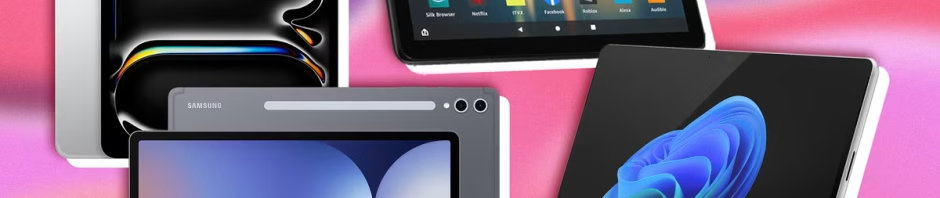
Remember when the tablet was going to kill the laptop? A decade ago, pundits confidently predicted that the iPad and its competitors would render traditional computers obsolete. That didn’t quite happen. Instead, the tablet found its niche as the ultimate consumption device—a screen for watching Netflix on the couch, browsing the web in bed, or keeping children entertained on long car rides. But the pandemic changed everything. Suddenly, millions of people were working and learning from home, and the humble tablet was pressed into service as a laptop replacement. Now, in the post-pandemic world, we must ask: Has the tablet finally evolved into a true productivity powerhouse, or is it still primarily a device for consuming content?
Tablets in a Post-Pandemic World, Productivity Powerhouse or Consumption Device?

The Pre-Pandemic Identity Crisis
When Apple launched the iPad in 2010, it created an entirely new product category. It was positioned as a magical device that fit between a phone and a laptop. In the years that followed, tablets became incredibly popular, but their use case remained somewhat fuzzy. For most people, they were secondary devices. You used your laptop for “work” (typing documents, editing spreadsheets) and your tablet for “everything else” (reading, gaming, streaming). The hardware was beautiful, but the software held it back. iOS at the time was essentially a blown-up version of the iPhone operating system, ill-suited for multitasking or precise work. Android tablets faced similar challenges, and Microsoft’s Windows tablets often felt like underpowered laptops with poor touch optimization. The tablet market matured, but it matured into a consumption-first identity.
The Pandemic Pivot: When Tablets Became Essential
Then came 2020. When offices and schools closed their doors, the demand for computing devices skyrocketed. Laptops sold out everywhere. For many families, the family tablet became the primary device for remote learning. Kids attended Zoom classes on iPads, did their homework on them, and submitted assignments. Meanwhile, adults who were suddenly working from kitchen tables found themselves using tablets for video conferencing, document annotation, and even light content creation.
This global stress test revealed both the strengths and weaknesses of tablets. On the plus side, their all-day battery life, built-in cameras, and cellular connectivity options made them incredibly versatile. They were quiet, cool, and portable. However, the weaknesses became glaringly apparent. Typing on a glass screen for hours was uncomfortable. Switching between apps was clunky. And the file management systems on iOS and Android felt restrictive compared to a traditional PC. The pandemic didn’t just increase tablet sales; it increased the demand for tablets to do more.
The Hardware and Software Evolution
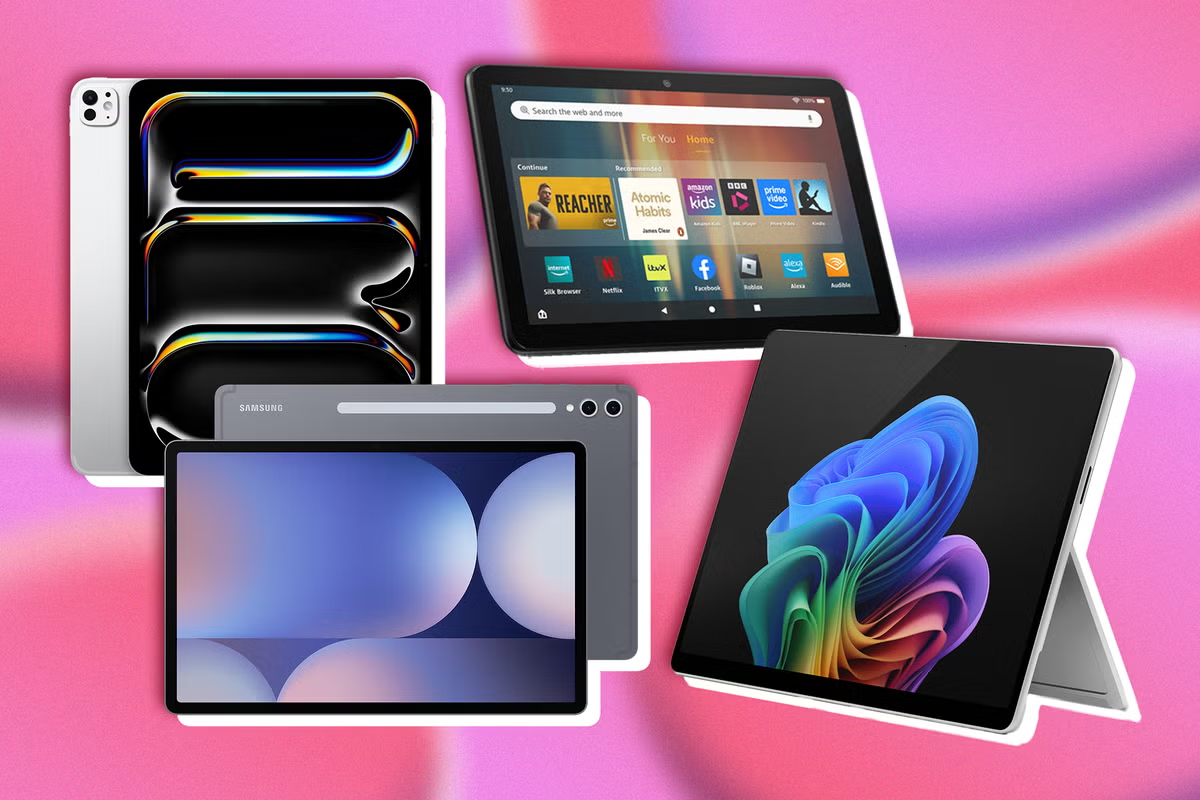
Manufacturers responded with aggressive innovation. Apple, with its iPad Pro line and the introduction of the M1 (and later M2 and M4) chips, effectively put desktop-class processors into tablets. This wasn’t just a speed bump; it was a fundamental shift. These tablets now had the raw power to handle intensive tasks like video editing, 3D modeling, and music production. Samsung’s Galaxy Tab S series followed suit with powerful Snapdragon processors and stunning AMOLED displays.
But hardware is nothing without software. iPadOS gained features like Stage Manager, which allows for overlapping windows and external monitor support, bringing it closer to a desktop experience. Samsung DeX, available on high-end Galaxy Tabs, transforms the Android interface into a desktop-like environment when connected to a monitor or keyboard. Both ecosystems have vastly improved their multitasking capabilities, file management, and support for external storage. The accessory market exploded as well. The Magic Keyboard for iPad and Samsung’s Book Cover Keyboard turned tablets into convincing laptop clones, complete with trackpads and backlit keys.
The Post-Pandemic Reality: The Best of Both Worlds?
So, where does that leave us today? The modern high-end tablet has successfully bridged the gap. It can be both a productivity powerhouse and a consumption device, often switching roles seamlessly within minutes. You can spend your morning editing a 4K video or writing a report with a keyboard attached, then detach it in the evening to watch a movie or read an ebook. The versatility is unmatched by any other single device.
However, this “Pro” experience comes at a cost. A fully tricked-out iPad Pro with a Magic Keyboard and Apple Pencil can easily cost more than a very capable MacBook Air or Windows laptop. For that price, you’re still getting a device that, while incredibly powerful, runs a mobile operating system. There are still compromises. Some professional software is less feature-rich on tablets. Multitasking, while improved, is still not as fluid as on a traditional desktop OS.
For the average user, a mid-range tablet remains the ultimate consumption device, and that’s perfectly fine. For students, creatives, and professionals who value portability and versatility, the high-end tablet has become a legitimate primary computing device. The post-pandemic world hasn’t killed the laptop, and it hasn’t relegated the tablet to a toy. Instead, it has allowed the tablet to finally grow up, offering a compelling third option that sits confidently between the phone and the computer, adapting to whatever you need it to be at any given moment.