
It’s a device that most of us reach for within moments of waking up, and it’s likely the last thing we look at before going to sleep. The modern smartphone is so ingrained in the fabric of daily life that it’s easy to forget it hasn’t been around for very long. Its journey from a clunky, expensive brick to the sleek, powerful pocket supercomputer we carry today is one of the most rapid and transformative technological evolutions in human history.
The Evolution of the Smartphone: From Brick to Pocket Supercomputer

The “Zero” Generation: The Foundation
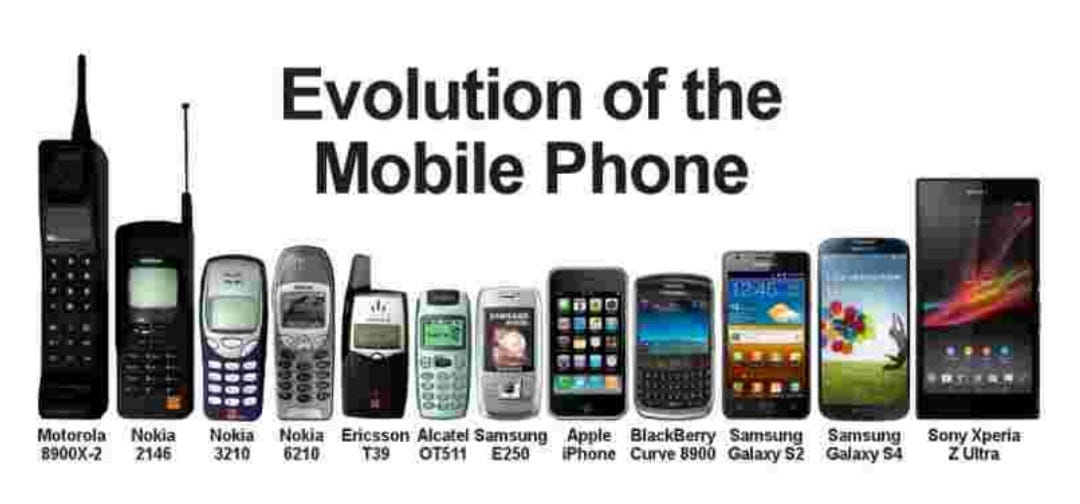
Before the smartphone, there was the mobile phone, and before that, the idea of a portable telephone was pure science fiction. The first commercially available mobile phone, the Motorola DynaTAC 8000X, arrived in 1983. Weighing a hefty 2.5 pounds and costing nearly $4,000, it offered a mere 30 minutes of talk time after a 10-hour charge. Affectionately known as “the brick,” it was a status symbol for the wealthy elite, but it planted the seed for a portable, connected world. Throughout the 1990s, phones shrank in size and price, with devices like the Nokia 3210 becoming cultural icons. These were the domain of calls and SMS text messaging, a revolutionary concept in itself. The idea of putting a computer in your pocket was still a distant fantasy.
The Dawn of the Smartphone: The Communicator and the PDA
The term “smartphone” didn’t appear overnight. In the mid-90s and early 2000s, two separate paths began to converge. On one hand, you had Personal Digital Assistants (PDAs) like the Palm Pilots and the Apple Newton. These were powerful organizational tools with touchscreens and styluses, capable of managing contacts, calendars, and notes, but they lacked cellular connectivity. On the other hand, phone manufacturers like Nokia and BlackBerry (then Research in Motion) began adding more advanced features to their devices. The BlackBerry, with its physical QWERTY keyboard, became the must-have gadget for business professionals, offering secure email on the go. IBM’s Simon Personal Communicator, released in 1994, is often credited as the first true smartphone, combining a mobile phone with a calendar, address book, and even a touchscreen. However, it was clunky and ahead of its time. The stage was set for a device that could truly merge communication and computation.
The iPhone Paradigm Shift: 2007 and Beyond
Then came January 9, 2007. Steve Jobs took the stage at Macworld and introduced three revolutionary devices in one: a widescreen iPod with touch controls, a revolutionary mobile phone, and a breakthrough internet communicator. He wasn’t introducing three separate devices; he was introducing one: the iPhone. The original iPhone wasn’t the first smartphone, but it was the first to get the formula right. It ditched the physical keyboard and stylus in favor of a large, multi-touch display that could be manipulated with your fingers. The software was intuitive, the interface was beautiful, and it ran a full-fledged version of Apple’s OS X. It redefined what a phone could be. It wasn’t just for calling and emailing; it was for browsing the real web, listening to music, and interacting with content in a way that felt magical.
The release of the iPhone 3G in 2008, alongside the launch of the App Store, was the second, perhaps even more significant, revolution. Suddenly, the iPhone wasn’t just what Apple built; it was a platform for millions of developers. The App Store turned the smartphone into a truly personal device. Want a flashlight? There’s an app. Want to play a game? There’s an app. Want to track your finances, edit a photo, or navigate a city? There’s an app for that. Google’s Android operating system quickly followed suit with its own open-source model and app marketplace (the Android Market, later Google Play), spark a fierce competition that fueled innovation at a breakneck pace.
The Modern Marvel: Today’s Pocket Supercomputer
Today, the smartphone has surpassed the wildest dreams of the DynaTAC engineers. The processing power in your pocket dwarfs the computers that guided the Apollo missions to the moon. Modern flagship phones like the iPhone 15 Pro or the Samsung Galaxy S24 Ultra boast multiple high-resolution cameras with computational photography that can take stunning images in near-darkness. Their displays are sharper than the human eye can discern, with adaptive refresh rates for buttery-smooth scrolling. They are packed with sensors: accelerometers, gyroscopes, barometers, and LiDAR scanners, allowing them to interact with the physical world in profound ways.
They are our primary gateway to the internet, our mapping devices, our wallets, our fitness trackers, and our entertainment centers. With the rollout of 5G, they are more connected than ever, capable of downloading a full-length movie in seconds. The integration of Artificial Intelligence (AI) is the next frontier, with on-device machine learning enabling real-time translation, incredibly smart photo editing, and predictive assistance that learns your habits. The smartphone has evolved from a simple communication tool into the central processing unit for our digital lives, a testament to the relentless pace of technological innovation. It’s no longer just a gadget; it’s an indispensable extension of ourselves.