

Look at the wrists around you on any given commute. Chances are, a significant portion are adorned not with traditional timepieces, but with sleek, glowing smartwatches. From the Apple Watch to the Samsung Galaxy Watch and a plethora of fitness-focused bands, these wearable gadgets have become a massive market. But it forces us to ask a fundamental question: In our quest to be more connected, have smartwatches become an essential tool for health and productivity, or are they simply a distraction—a glorified notification center that vibrates on our wrist?
The Smartwatch Dilemma, Essential Tool or Just a Glorified Notification Center?

From Pocket Watch to Wrist Computer
Wristwatches themselves were an innovation in convenience, freeing the pocket watch from the vest. For over a century, their function was singular and elegant: to tell the time. The quartz movement made them incredibly accurate and cheap, turning them from heirlooms into disposable fashion items. The idea of a “smart” watch has been floating around for decades in science fiction, but it wasn’t until the early 2010s that technology caught up.
Early attempts like the Pebble Watch offered e-ink displays and basic notifications, proving there was a market for a wrist-based companion device. But it was the Apple Watch’s launch in 2015 that truly defined the category. Apple positioned it not just as a phone accessory, but as a comprehensive health and fitness device and a more intimate way to communicate. This blueprint has been followed and iterated upon by every other manufacturer since.
The Case for the Essential Tool
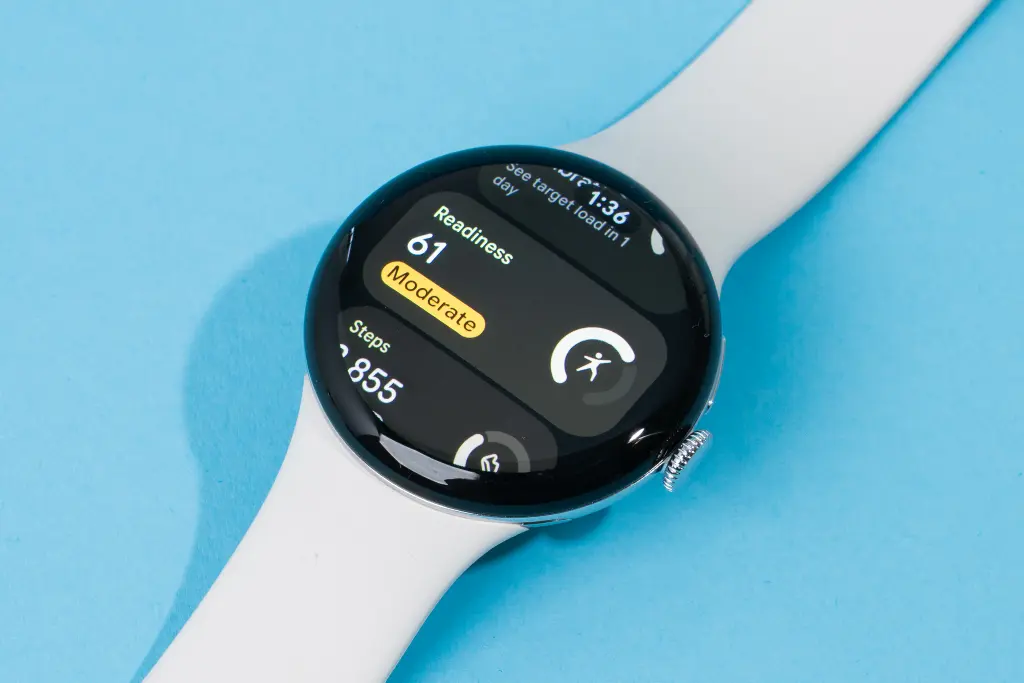
Proponents of the smartwatch argue that it has evolved far beyond a second screen for your phone. Its primary strength lies in proactive health monitoring. Modern smartwatches are packed with sensors that continuously track your heart rate, can detect irregular heart rhythms (like atrial fibrillation), and even take an electrocardiogram (ECG) on demand. For those with health concerns, this constant, non-invasive monitoring can be life-saving.
For fitness enthusiasts, they are an indispensable coach on your wrist. They track steps, distance, and calories burned with increasing accuracy. They monitor sleep patterns, providing insights into sleep quality and stages. Built-in GPS allows runners and cyclists to map their routes without carrying their phone. Advanced metrics like VO2 Max estimation, recovery time, and even blood oxygen monitoring (SpO2) provide a level of data previously only available to professional athletes with expensive lab equipment.
Beyond health, the convenience factor is significant. Being able to quickly glance at your wrist to see if an incoming message or call requires immediate attention allows you to stay focused on the task at hand. Paying for coffee with a flick of the wrist is faster than fumbling for a phone or wallet. Navigation with haptic feedback (gentle taps on the wrist to indicate a turn) is a safer way to navigate a new city while walking or cycling. In this view, the smartwatch doesn’t distract; it filters, allowing you to engage with technology on your own terms, reducing the need to constantly pull out your phone.
The Case for the Glorified Notification Center
Skeptics, however, see a different reality. They argue that despite the advanced health features, the primary day-to-day function for most users is simply receiving notifications. Instead of filtering distractions, the smartwatch amplifies them. Every like, retweet, email, and news alert now triggers a buzz on your wrist, creating a more persistent and immediate demand for your attention. It can paradoxically make you less present, as you’re constantly being pulled out of the real world and into the digital one.
The argument of convenience also cuts both ways. Interacting with a smartwatch is often a clunky experience. The small screen makes typing or detailed input nearly impossible. Replying to a message usually involves using scribble, voice-to-text (which can be awkward in public), or a set of pre-programmed generic responses. It’s often faster and more efficient to just use your phone. Furthermore, the daily charging requirement is a significant drawback. Unlike a traditional watch, which can run for years on a simple battery, a smartwatch is yet another device that needs to be tethered to a charger every night, creating another chore in our tech-saturated lives.
The Verdict: A Tool That Depends on the User
Ultimately, the smartwatch dilemma is a personal one. Is it an essential tool or a glorified notification center? The answer depends entirely on how you use it.
For a serious athlete or someone with a health condition who actively uses the fitness and medical monitoring features, it is an undeniably powerful and essential tool. For a busy professional who uses it to triage communications and manage their day without being chained to a phone, it offers a genuine productivity boost.
However, for the average user who buys one out of curiosity and ends up using it primarily to see who’s calling and to close their activity rings, it may indeed be an expensive, glorified notification center. The value isn’t inherent in the device itself, but in the discipline of the user to leverage its most powerful features and silence the noise. It is a tool of immense potential, but whether it enhances your life or simply adds to the digital clutter is a choice you have to make.